I look into the world and i think that we live a great time, where, in a click you can talk to people all around the world.

Interested in being a member (click here) or if you just want to leave a short message (click here)

Wednesday, May 02, 2007

"In the Name of the Father"

I have just seen this film (which I strongly recommend) and it was amazing the parallel that you can make with the present time. The plot to few that might not know is:

"A small time thief from Belfast, Gerry Conlon, is falsely implicated in the IRA bombing of a pub that kills several people while he is in London. Bullied by the British police, he and four of his friends are coerced into confessing their guilt. Gerry's father and other relatives in London are also implicated in the crime. He spends 15 years in prison with his father trying to prove his innocence with the help of a British attorney, Gareth Peirce. Based on a true story." (source: IMDB)

Which I found very similar to this old news:

"MAHER ARAR, Subject of Canadian Government Commission Report: I wanted to clear my name. Today, Justice O'Connor has cleared my name and restored my reputation.

JEFFREY BROWN: On Monday, a Canadian government commission report concluded that Arar, a Syrian-born Canadian citizen, was wrongly accused of having ties to terrorism by Canadian officials and improperly taken by U.S. authorities to the Mideast, where he was tortured." (to know more click here)"

OK, it was a different sentence, different number of people implicated and different type of person but is the same irrational reaction to fear from authorities. The first happen 30 years ago, the second a few years ago.

Tuesday, April 03, 2007

It's war Jim, but not as we know it

It appears as if Britain really is at war with Iran - well, a war of words to be more precise - and mealy-mouthed words at that. However, it seems that no one can hardly accuse the British government of being disproportionate in its response to this apparent act of war by Iran, or how the Times (London) puts it 'casus belli'.

Well, what else could you call the latest Iranian military actions? If anything, the ambush of some 15 British soldiers by the Iranian Revolutionary Guards represents something of a propaganda and military coup for the ever increasingly embattled Iranian authorities. When it comes to the art of war, the British government's image in the eyes of the world is increasingly perceived as second-rate and 'softly-softly'. Such a military strategy by Britain will only succeed in encouraging even more ambushes.

A week has now passed and the British government have failed to set any deadlines for the immediate release of the soldiers, it's as if our political class have been struck down with a chronic case of 'risk aversion'. There is a serious flip side to pursuing a cautious approach - such a risk averse strategy is actually bordering on moral cowardice in the face of the enemy.

It's as if the British government have fully and wholeheartedly embraced a cautionary strategy, that is remarkably similar to the doctrine commonly known as the Precautionary principle, much loved by the environmental movement, which states that under no circumstances should action be ever taken, unless you can be certain, without doubt that there will be no negative consequences as a result of your actions.

More recently, risk averse societies like Britain would tend to strike first on the basis that pre-emptive action was a legitimate form of self-defence. Today, the adoption of a precautionary strategy seems to have led to paralysis in policy making. It appears that our political elites are relying more on the words of lawyers in terms of strategic and political leadership. Our government itself seems paralysed in the face of a blatant act of war - they are fearful that any military action against Iran could have a negative 'boomerang effect' - so, instead of 'going in' and saving the marines, thereby averting a disaster, they fear that action would only realise another catastrophe - not the kind of things politicians really desire. (1)

Britain’s precautionary approach to Iran has only succeeded in slowly dragging this whole affair along, rather than settling it - none of this has been lost on the Iranian authorities who have used the past few days to ratchet up the political and military stakes. With a government like ours, there is one thing we can be certain of, their increasing obsession with risk, and aversion to risk, will only succeed in inviting even more ambushes, and other such 'gestures of defiance' in the not so distant future.

(1) The Risk Society at War: Terror, Technology and Strategy in the Twenty-First Century By Mikkel Vedby Rasmussen - p93 and p199.

Monday, April 02, 2007

EU slams United States, Australia on climate change

By Jeff Mason at Reuters

"BRUSSELS (Reuters) - The European Union accused the United States and Australia on Monday of hampering international efforts to tackle climate change.

"We expect ... the United States to cooperate closer and not to continue having a negative attitude in international negotiations," Environment Commissioner Stavros Dimas told delegates at a United Nations-sponsored meeting to review a report on the regional effects of rising global temperatures.

"It is absolutely necessary that they move because otherwise other countries, especially the developing countries, do not have any reason to move," he said. (...)"

Thursday, March 29, 2007

Guido the 'prat' meets Michael White

Watching the TV performance of the blogger extraordinaire Guido Fawkes, with the heavyweight political editor Michael White, on the BBC's Newsnight programme last night - the words 'way out of your league' sprang immediately to mind. It's been a little while since I've seen anyone get so savagely and systematically demolished (politically speaking) as Guido did last night.

It certainly appeared that Guido had stepped into the gladiators arena, only to find out that he was going to be fed to the lions anyway - indeed, I didn't know what was more humiliating, watching Guido uming and r-ring, or watching the self-righteous Jeremy Paxman step in to 'defend' Guido. Either way, Guido certainly looked like a right first-class 'prat', as described by Michael White.

There are a few serious lessons to be learnt when dealing with the likes of Michael White on TV - for a start, you had better make sure you know off-by-heart every imaginable question that might be thrown up. Secondly, have (at the very least) a half decent progressive answer for those questions - or else you might end up looking like Guido - a laughing stock.

A few choice words on this matter from the Devil's Kitchen, well worth reading.

Also, Benedict White over on the Conservative's blog now wishes he had never voted for Guido in the first place to appear on Newsnight.

Oliver Kamm, the anti-blogger, who describes himself as being 'hostile to the whole medium of blogging', throws in his two penth worth here.

Finally, some words from Guido himself, who said 'the live interview was definitely a mistake and against my better judgement'. You can say that again!

I am not stealing I am an Activist!!!

I just saw the site of yomango (literally I Steal) and my world changed. They present an all new perspective to the world of robbery. It is no longer an illegal activity it is a political statement. I have to admit that the founder of this movement was really imaginative. And they are really organized too. They have a forum where they discuss the techniques of stealing, they perform legal advice and they support all that with their political statement.

Probably that was what Winona Rider was doing when she was busted.

Tuesday, March 27, 2007

Time to Think

Just a thought. If you had to create an entire society would you create the society that you are living it?

Monday, March 19, 2007

Direct speech: Eric Langager

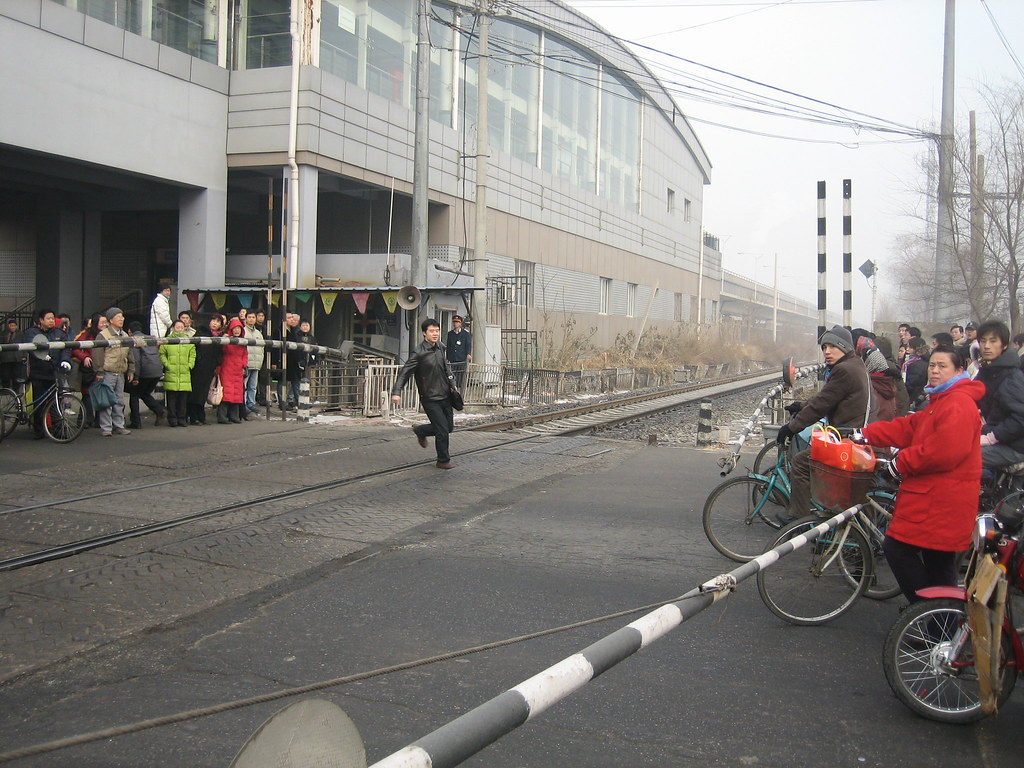
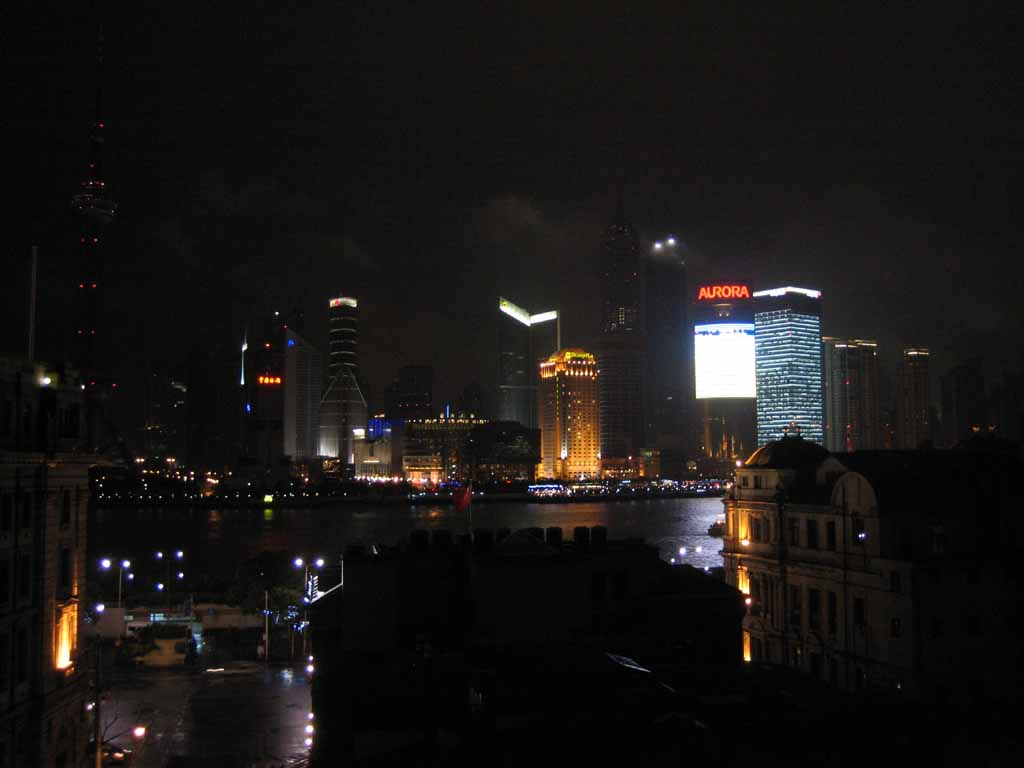
When I thought of creating this section I immediately thought of China because of the recent comments about China censorship of internet sites. I wondered how it was living there and what could be the point of view of someone living there. So it was then that I came up with Eric´s site and contact. Eric Langager is the writer of Eric’s Beijing Diary, a blog about his stay in China. He lives in China since 2003, where he teaches. He already lived in four different countries and had many professions.

Once again I would like to thank him for the immediate response and sympathy that allowed the following interview:


In a few words describe yourself (so people can get to know you better).

Eric Langager (EL) - Who am I? The story really begins with my grandfather, who was from Norway, and came to the US as a homesteader in the early days of the 20th Century. I myself was born in Tokyo, and grew up in the north of Japan where my parents were missionaries. I took my first trip to America when I was three, but we returned to Japan, where I lived until I was thirteen. After that, I lived in the United States. Mainly four states (North Dakota, Minnesota, Oregon and Arizona) except for seven years in the trucking industry when I spent some time in every one of them. After driving to the moon and back (600 thousand + miles), I cleaned out my truck and decided to go back to my profession (I had been a teacher). However, I didn't want to return to the public school system, so I studied for Microsoft certification and became a technical trainer. During the four years I taught at a private software university in Arizona (UAT), I decided to become a database specialist, and obtained Oracle certification. In 2004, I joined the faculty of the Software College here at the Beijing University of Aeronautics and Astronautics.

You already lived in 4 different countries (Japan, USA, Canada and China) and visited many places and people. What did you find similar in those places/people and what did you find completely different?

(EL) - Kipling said that "East is east, and west is west, and never the twain shall meet." Japan has spent the years since World War II trying to disprove that notion, and has largely succeeded. So while there are ways that Asian cultures differ from a western culture like America, there are also ways that a developing country like China differs from developed nations like Japan and America. China today reminds me so much of the Japan of my childhood: growing economically, yet somehow simpler, slower paced, and more relaxed than the more frenzied developed societies.

What was the biggest shock when you start living in China?

(EL) - You know, I went through major culture shock when I moved to America as a thirteen-year-old kid. I didn't ever want to go through anything like that again, so I took great pains to prepare myself to live in China. But there is always something you don't anticipate. For me, it was food. I thought I would be able to adapt to a different cuisine. I was prepared to suffer through food that tasted very different from what I was used to. What I was not prepared for, was the seemingly unlimited variety of incredibly delicious dishes in the seven cuisines of China. It really shouldn't be legal to make food so delicious.

You live in China for about 3/4 years. How is the day-by-day life in a dictatorship and how do you feel their presence?

(EL) - First of all, China cannot really be called a dictatorship, because in order to have a dictatorship, you need to have a dictator. The leadership of China is very different from the early days of liberation in that respect. Mao certainly was a dictator. And I suppose you could say the same thing about Deng Xiao-ping, because, although he was very different from Mao, he did tend to lead by dictate that went beyond legal authority. The most far-reaching of his famous economic reforms really began in the nineties, after he had relinquished all formal official positions.

But the modern leadership is not this way. The days of one man being able to arbitrarily overrule the party are history (at least for now). Don't get me wrong, Hu Jin-tao is not just a figurehead. He is an executive, much like the US president, or the British prime minister. He is essentially the "CEO" of China. But he does not by any means wield absolute authority. Truthfully, it is not that easy to define exactly how things work in China, because it is changing so rapidly. The only thing we know for sure is that it is very, very different from the way it was before. China is not a democracy in the American sense of the word, but it is not the oligarchy that some in the West suppose, either. True, the government is controlled by the Communist Party, but remember, the Party has 60 million members.

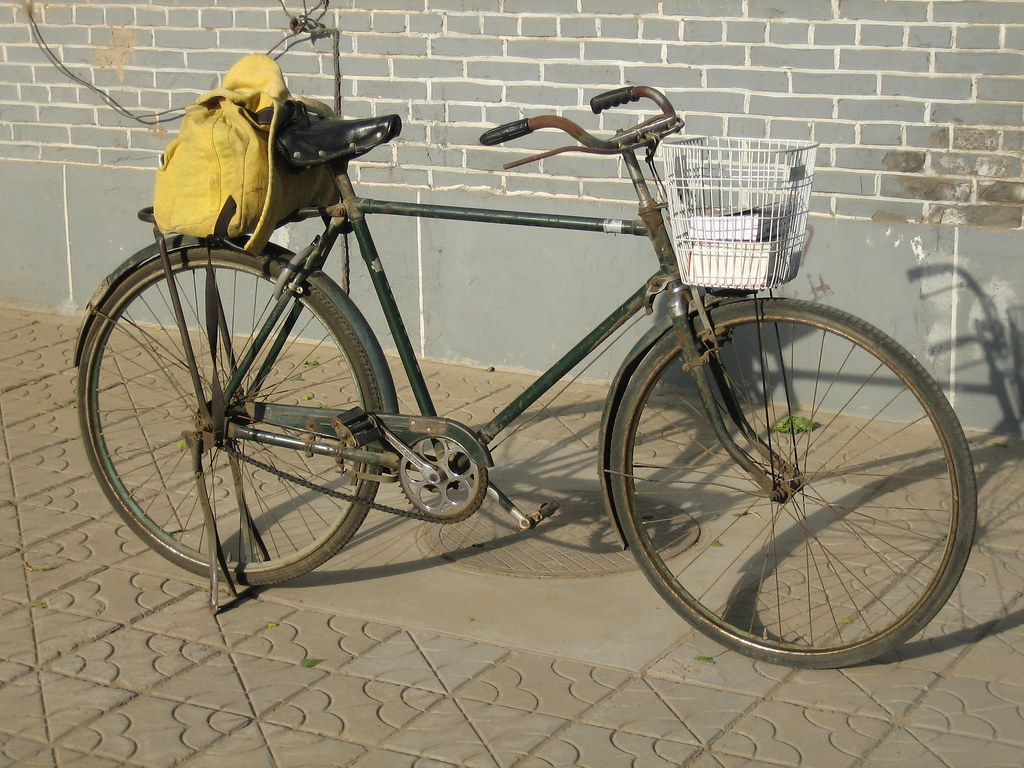
Now, as to the main part of your question: What is it like? Well, when times are good economically, it's great. I took a drastic cut in pay to come to China (about 75 per cent). But I also saw a 90 per cent cut in cost of living. Simply put, in terms of day-to-day living, it is easier (at least for a single person) to get by in China. I don't have a car. I don't want a car. There are lots of busses, I have a bicycle, and taxies are not expensive.

But what would life be like in an economic downturn? There could be problems, because corruption is quite widespread in China. A booming economy absorbs much of that. China has close to a 200 billion dollar trade imbalance with the United States. That means that every five years or so, the United States of America pours a trillion dollars in hard, cold cash into the Chinese economy. That's a lot of money.

We talk about censorship in China a lot but how is it he felt in China? What does the common Chinese feels about it?

(EL) - Basically, if you can read English, you can get the information you need in this country. I read the China daily, and watch a couple programs on the 24 hour English channel. In addition, I go to the coffee bar and read the Wall Street Journal. Every day, I listen to BBC Newshour. I also listen to Morning Edition on National Public Radio, and I watch one American news program each week. It's called "Mclaughlin Group." I download the Quicktime video file for this half-hour program from their web site.

Chinese people seem to be amazingly resigned to getting news from the sources that are allowed to them in Chinese. This is not all bad, because there are some very good papers in China (such as Beijing News), that operate as close to the edge as the government will let them. But I encourage them to use the Internet to avail themselves of other perspectives.

In your opinion, how does the Chinese people perceived the western countries?

(EL) - Generally favorably. The US has lost credibility because of the Iraq War, but Chinese people are generally very friendly to westerners.

What is the effect of China economic growth in the common Chinese person, and what is changing because of this?

(EL) - Deng Xiao-ping's economic reforms lifted hundreds of millions of people out of poverty (at least the population of the United States). So it is much better than before, but there are still lots of poor people in this country.

Still, many more people than before have the money to provide their children with good education even if they did not pass the National Entrance Examination.

What do you find more appealing in teaching and living in China?

(EL) - Well, I alluded to it before...I don't know, I guess I just like being able to decide for myself how modern I want to be. I ride a bike, but I carry my laptop with me.

Being connected to technology what was the best inovation for you? And what innovation do you want to see in the future?

(EL) - The most useful innovation since I have been in China, is that all the coffee bars in this area have set up free high-speed wireless Internet connections. Regarding future innovations, this may seem strange coming from a technical trainer, but I hope China doesn't develop too many new innovations. Life tends to get complicated when you do that. I guess if there is one thing that would be nice, it would be the development and enhancement of remote communications.

[All pictures were taken from Eric's site]

Direct Speech

Direct Speech is a new section of Wall of Speech. In this section it is conducted some interviews with people around the world. The main focus is to get to know some interesting people and their inside view of topics that are discussed in many blogs and newspapers. There is no regular schedule to do these interviews and they will occur every time there is an opportunity and relevance.

The first person to be interviewed is Eric Langager, Associate Professor who is currently teaching in College of Software, Beijing University of Aeronautics and Astronautics and will be published tomorrow.

Wednesday, March 14, 2007

ID(eal) or not ID(eal) System

I came up with this discussion at Matt's Site (click here). I have to admit that I couldn't understand the problem about the implementation of an ID Card System in the UK. After being explained and reading 22 reasons against this system at a site that Matt pointed me (click here) I had a clearer picture of the problem.

I have to admit that the system is quite different from the one that regulates my country. Here is mandatory to have an ID card and to always use it (if you don't have the policemen can take you to the police station to identificaty). But for this system to be secure (and not misused) there is one thing that must be always present: there can not be any cross reference to other personnel information. I know that this is difficult to secure, for instance when you open a bank account you have to put your id card number, but is quite effective. There is no direct link from this information database with another (for example a person has a different ID card number, Social Security number and Tax payer number and these informations are independent and it is prohibited for the state to have a common database with this information).

These rules were created so that the state isn't able to hold complete information about a citizen and misuse it like it already happen in the past. This notion is vital for the all system to work, otherwise politicians will have access to much information that is not necessary for them.

I know that we now live a time where security is almost number one value of many regulations and we are losing our freedom for that. For now it is not yet present the danger of these changes because we still live in an open democracy but what about in the future? Is this the ID(eal) system to protect us or will be more helpful for future leaders that will be more totalitarians?

I think that we are slowly loosing our freedom, not understanding that this will have a major impact in our future freedom of choice and speech.

Tuesday, March 13, 2007

Wall Of Speech is banned in China

It's not as if the Wall Of Speech is the hub of anti-Chinese propaganda in the West, but for some strange reason (unknown to me) WoS has effectively been banned in China. No one in China can visit or view this site.

To find out if your own site is available to be viewed in China simply take this test that I discovered over at the heavyweight Conservative blogger Elle Seymour .

If anyone has any ideas as to why WoS in banned in China, I would surely like to hear it.

Wednesday, March 07, 2007

Letter from Santa Claus

I have just received a letter from Santa Claus answering my wish list letter that i sent him this year.

"Dear Mr. Stran

First of all I am sorry for only writing you back now but I have been in the hospital until today. For now you know that I could not fulfil your request. But what you call "simple request" was completely impossible to obtain.

I first went to see George W. Bush but immediately he kick me out (literally) of his office saying that the next time I was there he would make me USA public enemy #1 and would bomb my house for preventing reasons.

I then went to Iran but he just told me if I thought that he really believe in Santa Claus and kick me out (once again literally) saying that he make a "Fatah" against me. Then came the suicide bombers but I was almost blown away buy one and had to get out of there in a hurry.

Being near, I went to Israel but they direct me back to Palestine telling me that only after they declare the same thing they would accept to make this statement. The Palestinians said the same thing and direct me back to Israel. I was like that for days until I gave out.

As for Ben Laden do you really think that I could find him?!?

Then, I went to see the G7 leaders but when I was arriving to the place I remembered what George W. Bush told me and thought it was better for me not to go (after all I need my factory intact to give the presents to all the other kids).

Finally, I tried to convince all countries in the world to comply with the obligations of the charter of the UN. For some it was easy but for the rest, let me just say that I was shot at, stabbed and beaten up and end up in an hospital where I remained until yesterday (because of this it was Mrs Santa Claus that gave the presents this year).

I am sorry that you didn't received your present but like I told you it was impossible.

Ho, Ho, Ho

Santa Claus

[P.S. Next year, if you ask me the same or similar I quit!!!]"

Tuesday, March 06, 2007

New Look of Wall of Speech

I have just completed the changes in the blog. The first of all and most obvious is the looks. I hope that you liked the change (hope that you don't find it too dark), and that it will be nicer for you to read the posts.

But that was not the only change. First of all there is no more google ads (I just left them in WoS Internal talk to whoever is interested).

Besides this, I have created the following:

1) Blog Feed: I putted the feed of the blogs of the main contributors so that you can see what is being written there.

2) Labels: I introduced the labels so that you can easily see the posts by themes. I also put the author of each article (hope that you don't mind) so that people could also view articles by Author (I will ask you a favour: if you could always label your article with your name in order to not miss any article)

3) Wall of Speech quick links:
*Open Invitation (if people want to participate they just need to leave a message or send an email)
* WoS Statement (tells what the site is about);
*WoS Internal Talks (link to the discussion blog about this site);
*Box of Suggestions (new): I have created this article so people would suggest improvements or could complaint about anything they dislike;
*Quick Speech (new): this space is created to enable people who don't want to be a member to write articles to be published;

These change aim to improve the appearance of the blog, to improve the its quality and to build up the participation, hope you liked it.

I would also like to take this opportunity to thank all the writers of this blog for their great articles and for making possible the fulfilment of the initial idea. Besides this, I would also like to thank Matt M. for the big help that he gave me to enable me to change the appearance of this site .

Thank you to everybody and I hope that you continue to have fun at this blog.

Monday, March 05, 2007

God-shaped hole

There’s a piece on the New York Times website today in which Scott Atran, “an anthropologist at the National Center for Scientific Research in Paris, with joint appointments at the University of Michigan and the John Jay College of Criminal Justice in New York”, puts forward a version of the God-shaped hole argument – the idea that human beings are “wired” to believe in the supernatural.

The work done by Atran is fascinating, especially the “African magic box” experiments, but I think he takes his findings a step too far.

“Why do we cross our fingers during turbulence, even the most atheistic among us?” asked Atran when we spoke at his Upper West Side pied-à-terre in January.

I don’t. In fact I quite enjoy turbulence, especially if it’s a long flight. For what it’s worth, I’m not superstitious: I don’t cross my fingers, I don’t mind the number 13, I don’t touch wood, I walk under ladders and on cracks, etc. I’d also quite happily put my hands in Atran’s magic box. I rather suspect I’m not alone in this.

This isn’t to deny that there’s a general tendency towards beliefs in the supernatural in some form. However, it’s far from as strong as some people seem to think. Most superstitious behaviour is probably a result of upbringing – it’s always difficult to shake off the beliefs you were brought up with, and they often remain, lurking, at the back of your mind – and the, understandable, desire to somehow influence events beyond our control.

I’d bet that Atran had a far more ”religious” upbringing than I did – the opening paragraph of the piece seems to confirm that. Which might explain why it appears to be a lot harder for him to shake off superstitious beliefs than for me.

Atran says he faces an emotional and intellectual struggle to live without God in a nonatheist world, and he suspects that is where his little superstitions come from, his passing thought about crossing his fingers during turbulence or knocking on wood just in case.

For him, atheism is counter-intuitive because he was raised to see the world in a completely different manner. For me, it’s the opposite way round: I find theism to be counter-intuitive and I’m far more comfortable with the atheistic, naturalist view of life.

That the God-shaped hole is more an environmental than biological issue would also seems to be confirmed by the changing attitudes towards religion in the UK, as shown in this Telegraph article. Atran, presenting himself as a typical case, argues that his superstitious side will probably become stronger as he becomes increasingly aware of his impending demise. However, an increasing number of people seem to be heading in the opposite direction.

Friday, March 02, 2007

Not for America, not for the World!

The Bush’s 15 minutes of Fame are almost over. His presidency is reaching is final time and his Legacy will be clearer in the future. He will leave the Presidency failing almost all goals and will be a great candidate for the worst USA president of all time.

The recent plans for the Iraqi war shows us that his quest for war was not to make USA or the World safer. Also, was not to gain economic power at long term. Instead the war was intended to make some companies very profitable during his presidency and to support his personnel revenge against Saddam Hussein. With his decisions, he made UN weaker, to the point that is no longer sure that it will survive at long term.

In terms of internal affair his policy also failed, but I believe that it is better for Americans to write about this subject (I am an outsider).

The worst part, the part that American citizens are guilty is that he won two elections. While the first was very imprecise, the second one was clearer that USA citizens had a chance to change for better and did not take it. You can say that Democratic Party had a weak candidate, but I think when making a decision you have also to take into account the team behind the man and the republican team was really bad.

Now that every thing is almost over, we can just hope that in future the presidents will be better and able to correct so many mistakes. Bush was a terrible president and work only for his personnel goals. He clearly was not the right president.
Not for America and not for the World!

Monday, February 26, 2007

Serbia cleared of genocide

By Mark Oliver, Mark Tran and agencies,
Monday February 26, 2007
Guardian Unlimited.

Serbia was guilty of failing to prevent the genocide of some 8,000 Bosnian Muslims at Srebrenica in 1995, the UN's highest court ruled today.

But the international court of justice cleared Serbia of direct responsibility for genocide and complicity in genocide in Bosnia, in the 1992-1995 war.

The decision took the form of several votes. In the key verdict, the court decided by 13 votes to two that Serbia had "not committed genocide, through its organs or persons whose acts engage its responsibility under customary international law". In another vote, however, the court found by 12 votes to three that Serbia had "violated the obligation to prevent genocide".

Thursday, February 22, 2007

£300 million

The taxpayer is going to take a hit for £300 million because of NuLab's inability to give the farmers their money on time. Another Government IT failure ? and they reckon that ID cards will be secure- We need a new chief executive for UK plc

Blogger's block

Just like a writer’s block I am having a blogger’s block.

I look at the news and can not find anything relevant enough to write about. I look to what divide us and yet not a single word comes into my mind. I look at the world and it is the same. The war did not end, the hunger still exists, diseases are killing and there is no cure for cancer. So why this is not affecting me enough to, at least, write something about it.

Is it a blogger’s block or am I just to tire to talk about the same things?

Friday, February 16, 2007

A brief look at the World

Watching some headlines it seems that we are on the Apocalypse. For instance on Reuters I read that "Taliban deploy 10,000 fighters for attack"and that "U.S.-Iraqi forces meet little resistance in Baghdad". At BBC I read that "Chad may face genocide, UN warns". It is war, war and more war. I know that it has been always like that (I don't remember one year of my life that there was a war in this world). But it seems to me that there is a difference between old wars and the XXI century world. We no longer have ideology behind a war. There is no different sides that want to develop people welfare through different means (like Communism Vs Capitalism).
Some say that ideology is dead. I am a sceptic, I don't believe in that, I rather believe that we are living a period that ideology is resting, probably to "blow up" in a near future...

Monday, February 12, 2007

Love the sinner, hate the sin?

In Internet and other debates a distinction is often drawn between attacking a person’s ideas and attacking the person themselves. The first is seen as healthy, objective criticism, while the second is merely an ad hominem attack designed to rouse tempers rather than provoke discussion.

But can the distinction be so easily made? Can we draw a line between a person and the ideas they hold? I don’t think we can.

Consider the following: “It’s not you I’m calling hideous, just the clothes you wear!” Or, closer to home for a lot of us here: “I didn’t insult you, I just called your blog a mess of infantile, badly-written drivel!”

Both would be perceived as attacks on us by association: I choose the clothes I wear, I write my blog, etc. The same can be said for more ideological matters: Can we really separate criticising a religion from criticising those who believe in it?

Our ideas often have an emotional investment simply because they are our ideas. They reflect who we are and our ability to think. Suggesting that someone’s political views are misguided, for example, is inevitably to suggest that they themselves stupid enough to hold such views.

If we were purely rational beings, selecting ideas purely on a cost-benefit type basis, then we’d have no trouble adopting or abandoning them in light of new information. But we’re often more emotional/instinctive beings. The ability to rationally determine which political/economic system is best for 60 million odd fellow-citizens living in an increasingly connected world is beyond most of us, so we rely on gut-instinct and the emotional impact of certain events to guide us in what’s hopefully the right direction: a simple distrust of government, or experience of poverty can have more influence over our political thinking then the works of Smith, Marx, Keynes and Milton combined a lot of the time. Rational arguments are then drawn up after the fact to support our own beliefs and attack those which are different.

Human beings crave certainty: we like to think that our ideas are correct and that the life we’ve chosen is the right one. To this end, we wrap ideas and concepts around us like a protective cloak. To have someone start pulling on a loose thread can be an uncomfortable experience.

Friday, February 02, 2007

Climate Problems

“The IPCC, the most authoritative group on warming grouping 2,500 scientists from more than 130 nations, predicted more severe rains, melting glaciers, droughts, heatwaves and rising sea levels, especially if Antarctica or Greenland thaw.

The final text said it was "very likely" – or a probability of more than 90 percent -- that human activities led by burning fossil fuels explained most of the warming in the past 50 years.” (Taken from here)

First of all let me start to say that I like driving my car, I like travelling by plane, I like the products that some polluting industries give me, I like my lifestyle.

Saying this I have to say that I would like to see politics taking into account climate changes and its problems in their actions.

Why?

I won’t be moral about this issue (leave that for Greenpeace) but show one of my egoistic reason about this issue:
The natural resources that we use are scarce. What this affects me? Well, scarce resources will lead to nation conflicts (we have Iraq war as a good example) and to war. Almost all wars have economic reasons, more than moral reasons, to happen and most of them can be linked to the necessity of controlle of scarce resources. Also scarce resources will become more expensive to us which will lead to the end of our lifestyle.

I would like to leave a question: when will we start solving this problem?